
 en
en
 fa
fa



Tomato paste is a fundamental ingredient in kitchens worldwide, valued for its ability to enhance the flavor, color, and richness of countless dishes. While store-bought paste is convenient, preparing tomato paste at home offers unparalleled freshness, control over ingredients, and nutritional benefits. Homemade paste allows you to avoid preservatives, maintain natural flavors, and customize texture and seasoning according to your preference. At Orum Spoota, we believe that making tomato paste at home is not only a culinary skill but also a step towards healthier, more flavorful cooking. In this guide, we will provide a complete, step-by step process to help you create perfect homemade tomato paste, from selecting the right tomatoes to proper storage techniques.
Choosing the right tomatoes is one of the most critical steps for making high-quality tomato paste. Tomatoes with low water content, firm flesh, and rich flavor are ideal because they reduce cooking time and produce a thick, vibrant paste. Different varieties of tomatoes have unique characteristics, and depending on the season and availability, they can be selected accordingly:
- Roma: Firm, low water content, rich flavor – ideal for paste
- Plum: Balanced flavor, medium water content – good choice
- Cherry: Sweet, high water content – less suitable
- Beefsteak: Very high water content, mild flavor – not recommended
| Tomato Type | Water Content | Flavor Profile | Best Use for Paste | Availability/Season |
| Roma | Low | Rich, dense | Ideal | Year-round |
| Plum | Medium | Balanced | Good | Summer-Fall |
| Cherry | High | Sweet, light | Less suitable | Spring-Summer |
| Beefsteak | Very High | Mild, watery | Not recommended | Summer |
Orum Spoota Tip: Using ripe and fresh tomatoes significantly improves the color and aroma of your paste, ensuring a high-quality final product.
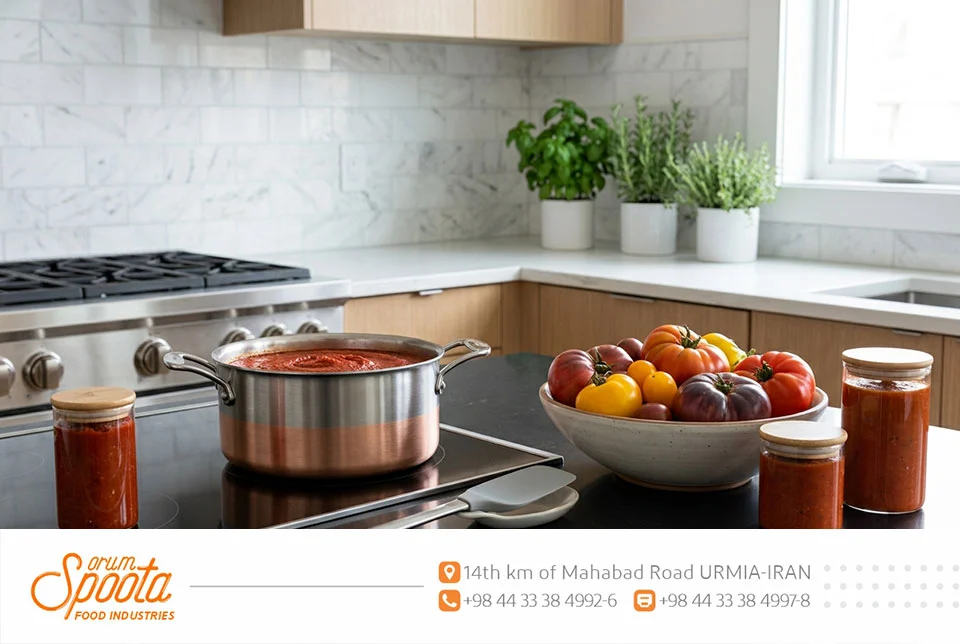
Proper preparation is essential to achieve smooth, flavorful tomato paste. Begin by thoroughly washing and sanitizing your tomatoes to remove dirt and any surface bacteria. After cleaning, peel the tomatoes to eliminate the skins, which can affect texture and consistency. Next, remove the seeds and excess water. This step is crucial for a rich, thick paste and reduces cooking time. Cutting the tomatoes into uniform pieces ensures even cooking and a consistent texture throughout the paste.
Orum Spoota Tip: For the best results, always use ripe, fresh tomatoes and maintain uniform sizes during preparation. This helps preserve natural sweetness and ensures a smoother final product.
Cooking tomato paste properly is key to achieving the perfect flavor, color, and texture. There are two main approaches: traditional simmering and modern techniques such as using a slow cooker or oven. Both methods can produce excellent results when done carefully. Begin by placing your prepared tomatoes in a heavy-bottomed pot. Simmer at a low temperature of 90–95°C to slowly reduce the water content without burning the paste. Stir frequently to ensure even cooking and prevent sticking. As the tomatoes reduce, the paste will thicken and develop a rich, concentrated flavor. You can also add a small amount of salt or oil at this stage to enhance the taste and preserve the natural color.
| Step | Temp (°C) | Duration | Notes |
| Initial Simmer | 90 | 30 min | Stir occasionally |
| Reduction | 95 | 1–2 hr | Achieve desired thickness |
| Final Blend | - | 5–10 min | Optional: add spices or oil |
Orum Spoota Tip: Slow reduction not only preserves the natural sweetness of the tomatoes but also enhances the aroma and color of your homemade paste.
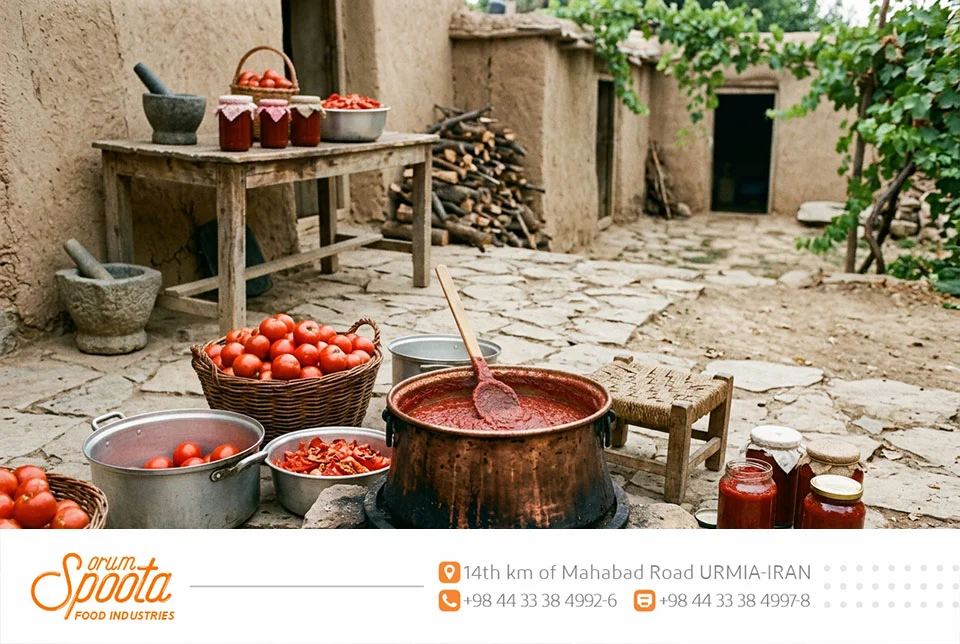
Achieving the perfect texture and flavor in homemade tomato paste requires attention to detail. The balance of salt, oil, and optional spices can greatly enhance the aroma and taste. For a smooth consistency, continuous stirring during reduction ensures even cooking and prevents lumps. Homemade paste differs from industrial products in both flavor and color; slow cooking preserves the natural sweetness and vibrant red hue. Adding a small amount of high-quality oil at the final stage can further deepen the flavor while maintaining a silky texture.
Orum Spoota Tip: Patience is key. Avoid rushing the cooking process to ensure a rich, concentrated flavor and an appealing color in your final paste.
Proper storage is essential to maintain freshness, flavor, and nutritional value.
- Refrigeration: Store in airtight glass containers for 5–7 days.
- Freezing: Portion into small containers or ice cube trays; lasts 3–4 months.
- Industrial Cans: Unopened, store in a cool, dry, dark place for 12–18 months.
| Notes | Best Practice | Shelf Life | Storage Method |
| Use within a week | Airtight container | 5–7 days | Refrigerator |
| Defrost as needed | Portion in small containers | 3–4 months | Freezer |
| Unopened only | Cool, dry, dark place | 12–18 months | Industrial Cans |
Orum Spoota Tip: Label your containers with the date of preparation to ensure optimal freshness and avoid spoilage.
Even experienced cooks can make mistakes when preparing tomato paste. Burning the paste or using high heat can ruin the flavor and color. Mold contamination may occur if storage is improper or containers are not airtight. Maintaining the correct thickness and consistency is also crucial; adding water too early or reducing too quickly can negatively impact the final texture.
Orum Spoota Tip: Always reduce slowly at low heat and monitor the paste closely. Small adjustments in timing and stirring make a big difference in the final product.

Homemade tomato paste is rich in lycopene, a powerful antioxidant that supports heart health and reduces the risk of certain cancers. It also contains high levels of vitamins A, C, and K, along with essential minerals. Compared to industrial paste, homemade paste retains more nutrients due to the absence of preservatives and minimal processing. Regular consumption can contribute to a healthier diet and boost immunity.
Fact Box: Did You Know? Homemade tomato paste retains up to 50% more lycopene than store-bought canned paste.


0 reviews